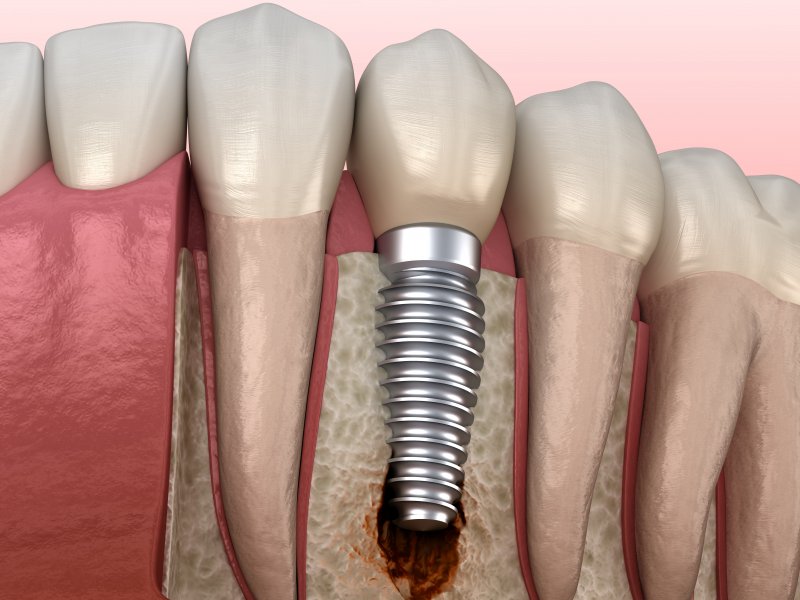
The success rate for dental implants is around 95% upon initial placement. As long as you commit to taking proper care of your smile over time, that percentage can remain for up to 10 years. But how can you tell if something might be wrong with your artificial teeth? Are there specific signs that indicate you have a failed dental implant? Find out what to look for and how to prevent this from happening in the first place.
Dental Implant Failure: What Can Happen?
The most common reason dental implant failure occurs is peri-implantitis. Similar to gum disease, it often develops as a result of poor oral hygiene. Bacteria attack the soft oral tissues surrounding your dental implant. If left untreated, it can break down the bone that is holding your post in place.
Other reasons for implant failure include:
- Failed osseointegration
- Autoimmune disorders
- Improper placement
- Facial trauma
- Poor lifestyle habits, like smoking or excessive alcohol consumption
What Signs Indicate There is a Problem?
You will notice if you are dealing with a failed dental implant if you:
- Have a loose dental implant
- Pain or swelling around the affected tooth
- Infection
- Difficulty chewing or eating your food
- Gum recession
How Can a Dentist Treat Dental Implant Failure?
Professionals who offer dental implants often also provide restoration, which means they can treat the underlying problem and try to save your artificial tooth. Depending on the underlying cause of failure, your dentist may recommend gum disease treatment or bone grafting.
It may require removing the failed implant, administering appropriate treatment (i.e., scaling and root planing, antibiotic therapy, bone grafting), and allowing your mouth to heal before discussing potential implant placement.
Can Dental Implant Failure Be Avoided?
Yes, in fact, dentists recommend the following to ensure your dental implants remain healthy and fully intact in the long run:
- Practicing good oral hygiene habits at home
- Continuing to see your dentist for regular dental checkups and cleanings
- Giving up unhealthy habits that increase the risk of implant failure (i.e., smoking)
- Talking to your physician about medications you’re taking for a condition or disease that can interfere with dental implant success (i.e., autoimmune disorders, diabetes, etc.)
- Wearing a mouthguard to avoid damage while playing sports or sleeping
Take the necessary steps to safeguard your smile. Doing so will allow you to enjoy a healthier, happier, and longer-lasting set of teeth that you can enjoy for the rest of your life.
About the Practice
Peterson & Cammack Family & Cosmetic Dentistry consists of three esteemed dentists who can help individuals enjoy life with permanent, healthy teeth. Offering dental implants to those who are without a full smile, we can discuss ways to prevent specific problems that might lead to dental implant failure. If you want to learn more about ways to prevent a problem with your custom prosthetics, visit our website or call (360) 459-4420 to schedule an appointment.