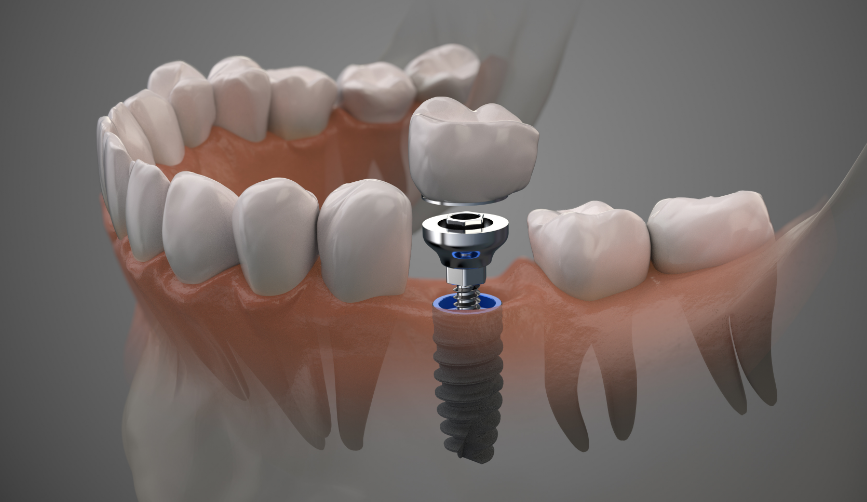
Dental implants are often described as the gold standard for replacing missing teeth because they closely mimic the look, feel, and function of natural teeth. If you already have implants or are considering them, you may wonder whether they can develop cavities just like real teeth. The short answer is no, dental implants themselves cannot get cavities—but that doesn’t mean they’re maintenance-free.
Why Dental Implants Don’t Get Cavities
Unlike natural teeth, dental implants are not made of enamel or dentin. The implant post is typically crafted from titanium, and the visible crown is made from materials like porcelain or ceramic. Since cavities form when bacteria produce acid that erodes tooth enamel, implants are immune to this type of decay.
Because of their materials, implants cannot rot or develop holes the way natural teeth can. This is one of the reasons implants are such a reliable and long-lasting tooth replacement option.
The Real Risk: Gum Disease Around Implants
While implants can’t get cavities, the surrounding gums and bone are still vulnerable to disease. Plaque and bacteria can accumulate around the implant just as they do around natural teeth. If not properly cleaned, this buildup can lead to inflammation and infection of the gum tissue.
This condition, known as peri-implant disease, can progress from mild gum inflammation to more serious bone loss around the implant. If left untreated, it can compromise the stability of the implant and potentially lead to implant failure.
How Peri-Implant Disease Develops
Peri-implant disease often starts with poor oral hygiene. Inadequate brushing and flossing allow bacteria to collect along the gumline. Smoking, uncontrolled diabetes, and a history of gum disease can also increase the risk.
Early symptoms may include redness, swelling, bleeding gums, or tenderness around the implant. Because implants don’t cause tooth pain the way cavities do, some patients may not realize there’s a problem until the condition becomes more advanced.
How to Protect Your Dental Implants
Caring for dental implants is similar to caring for natural teeth. Brushing twice a day, flossing daily, and keeping up with regular dental checkups are essential. Special floss or interdental brushes may be recommended to clean hard-to-reach areas around the implant.
Professional cleanings play an important role in removing plaque and tartar that can’t be addressed at home. Routine exams also allow your dentist to monitor the health of your gums and the bone supporting the implant.
Are Implants Still Worth It?
Even though implants require ongoing care, they remain one of the most durable and effective tooth replacement options available. When properly maintained, dental implants can last for many years and provide excellent function and aesthetics.
Understanding that implants don’t get cavities—but still need attention—helps patients make informed decisions about their oral health.
Dental implants are a powerful solution, but like any dental restoration, they perform best when paired with consistent care and professional oversight.
About the Practice
Peterson & Cammack Family & Cosmetic Dentistry is a comprehensive dental practice dedicated to restoring and maintaining healthy smiles. Our experienced dental team provides personalized implant care, preventive services, and long-term maintenance to help patients protect their oral health and enjoy the full benefits of dental implants for years to come.
Call us at (360) 459-4420 or request an appointment online.